
About the department
Economics has always attracted a large number of students. The welfare-state doctrine, planned economic development, the growing fiscal role of the State, expanding primary, secondary and tertiary sectors, developments in money, banking and international trade, and the wave of liberalisation, privatisation and globalisation have all made a knowledge of economics essential. Since its inception the department has worked to equip its students with this knowledge.
Objectives
- To impart economic education to students.
- To develop leadership qualities.
- To create economic awareness among students by establishing a department museum.
- To promote reading, writing and speaking skills related to economic literature.
- To increase publications by teachers and students.
- To undertake research.
History of the department
Shri D. A. Hegde, M.A., LL.B., was the first head of the department. He left in 1976 to become Principal of Gogte College of Commerce, Belagavi. Shri T. K. Dixit, the senior faculty member, then became head; he also served as Principal from 1 March 2004 to 31 May 2004. Shri J. S. Hegde headed the department until his retirement on 31 October 2017.
Shri Suresh S. Guttikar, an alumnus of the department who had taught here since 1988, then became head; the staff page now lists him as retired. Shri Divakar H. S., also an alumnus, joined as guest faculty in 2017. Smt. Soumya Madagaonkar and Mr. Sachin Naik served the department for some time, and Smt. Asha Naik is presently serving the department.
Vision and mission
Vision: To make rural students competitive enough to face the new challenges of globalisation.
Mission: To create an environment that enables students to think practically about economic problems.
Subjects taught
- Indian economy
- Microeconomics
- Public economics
- Monetary economics
- Industrial economics
- International economics
- Statistics and mathematics for economics
Learning resources
- Central library with 500 reference books in economics
- N-LIST e-journals
Activities
- Economics & Commerce Forum
- Four state-level seminars: relevance of Ambedkar's thoughts, B. H. Shridhara's literature, challenges of higher education, and re-reading Dr. Shivarama Karanth
- Two workshops: A Read on Kuvempu; Mahile, Samaja & Sahitya
- Interdisciplinary programme: Economics in Everyday Life
- 40 student seminars on topics such as agricultural economics, the IMF and IBRD, agricultural finance, and the importance of mathematics and statistics in economics
- Project work, talent competitions, book prizes for university toppers and free books from a personal library for students in need
2023-24: Economics internship programme
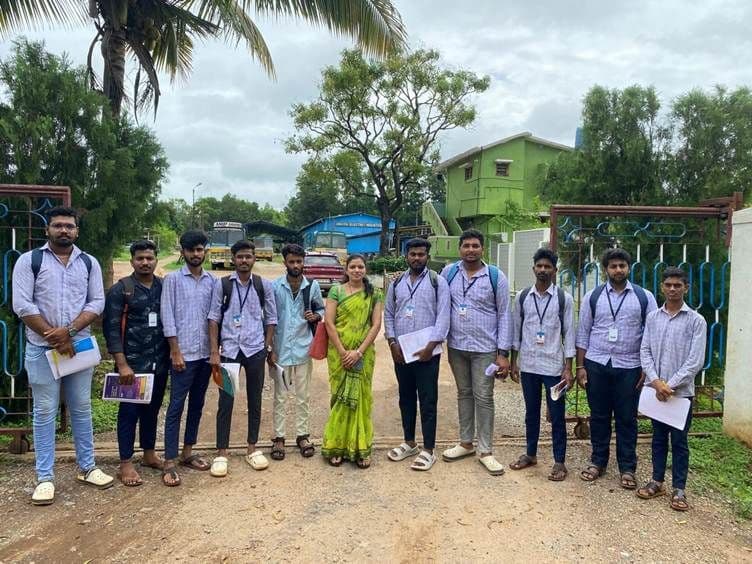
A one-week Economics Internship Programme was held at Anup Industry, Siddapur, from 14 to 21 June 2024 to give students practical exposure to industrial economics: production processes, cost structures and market strategies in a real industrial unit. All participants received certificates.
- Understanding the functioning and structure of a medium-scale industrial unit
- Analysing the cost and revenue components of the industry
- Observing economic theory applied in production and decision-making
- Gaining insights into labour management and supply-chain operations
- Studying the industry's contribution to the local economy of Siddapur
2024-25: FoodFest and student research
On 27 March 2025 the department organised the Taste and Treasure FoodFest, an exhibition and sale that gave students hands-on experience of market operations, pricing and consumer behaviour, and applied ideas such as demand and supply, cost analysis and profit maximisation. It was inaugurated by Shri V. V. Nayak, with Dr. S. S. Guttikar as chief guest. More than 25 students from all semesters ran stalls of homemade and regional delicacies, sustainable food items and traditional recipes, and analysed their sales data to report on market trends and consumer preferences.
Under faculty guidance, students carried out individual and group projects on the impact of the Shakti scheme, employment and income in the informal sector, the impact of digital payments on local businesses, sustainable agriculture and rural livelihoods, and job satisfaction in local industries. On 16 June 2025 a viva-voce was held for 12 final-year B.A. students, with Mr. Eresha R., Lecturer in Economics, GFGC Siddapur, as external examiner; he appreciated the quality of the work and offered suggestions for improvement.
Faculty
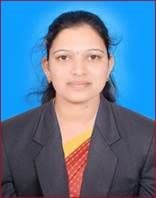
Mrs. Asha Lakshman Naik
M.A., KSET
6 years of teaching experience